










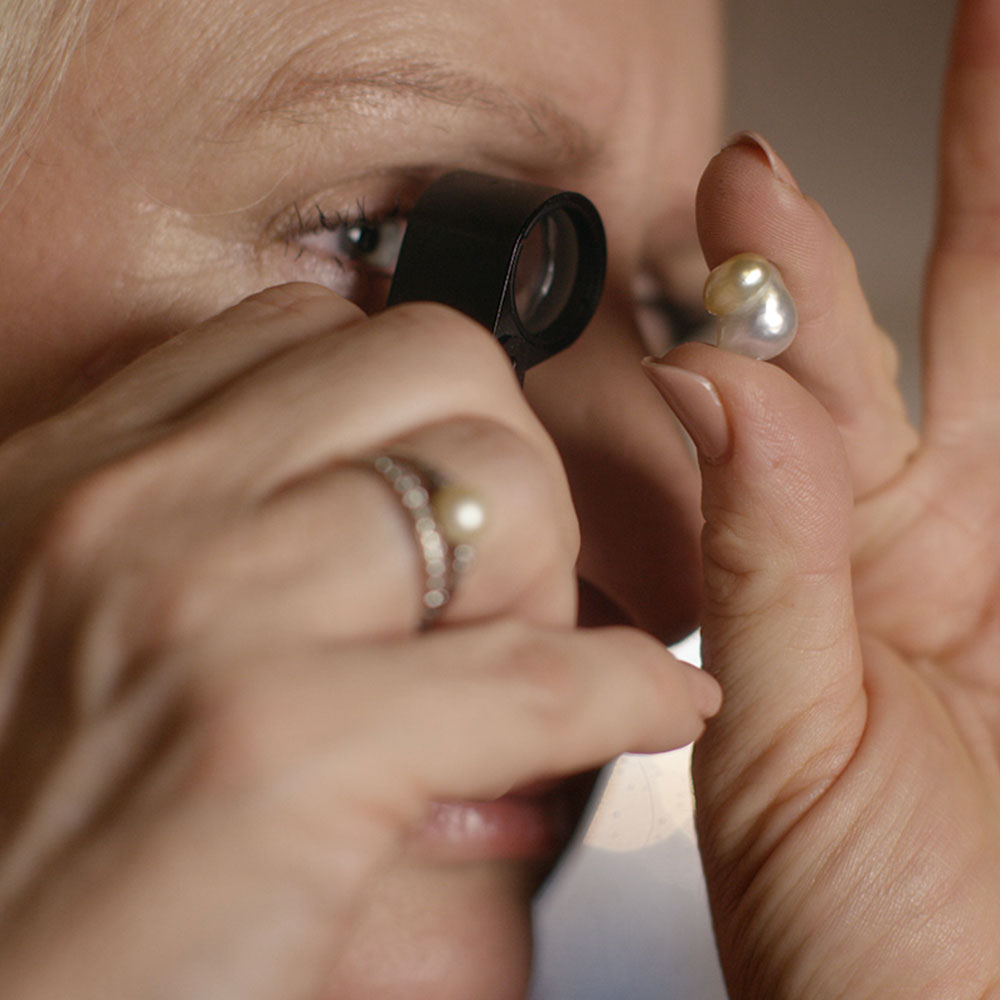








Perhaps you’ve inherited a strand from a grandmother, or spotted one in a vintage shop. Either way, the question is the same: is it worth anything? Only an expert can tell you for certain, but you can learn a lot by looking closely first. In this article, Chrissie Douglas explains what she looks for in order of importance.
Lustre comes first
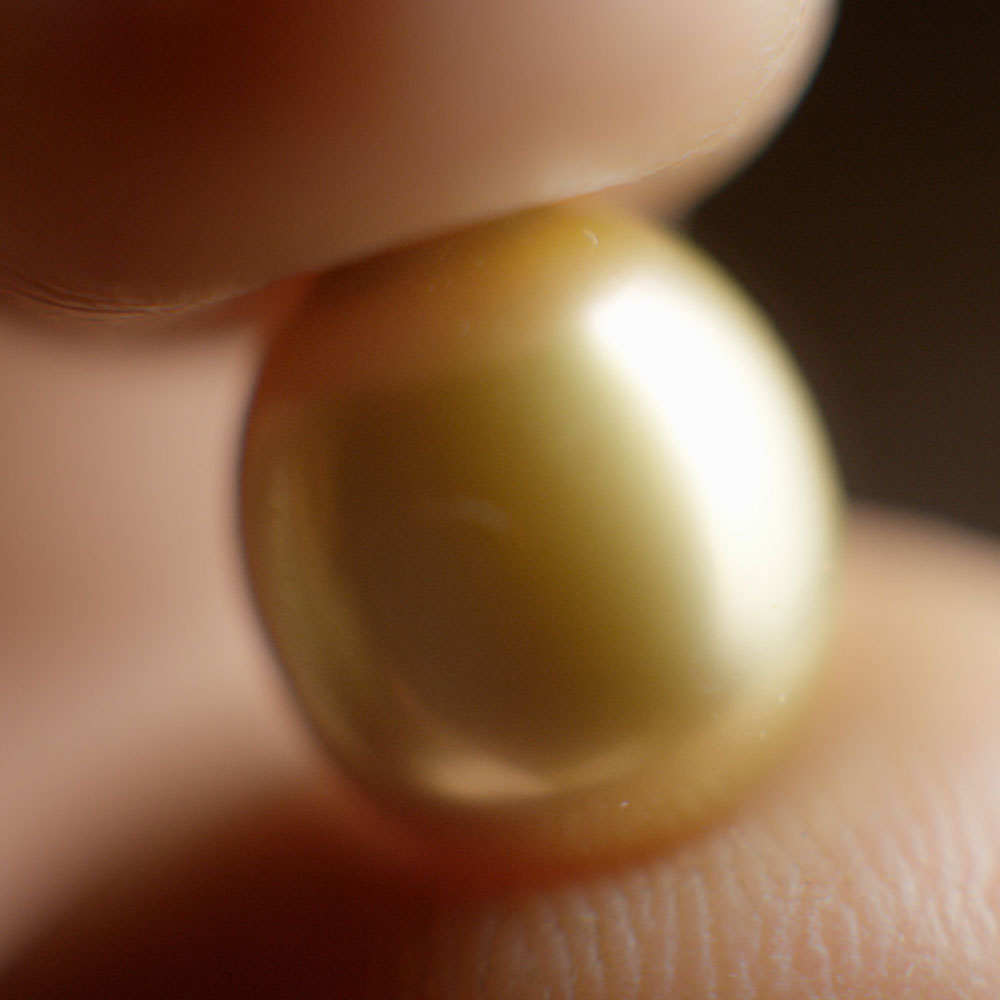
Lustre is the way light moves through the layers of nacre, and it’s where Chrissie always starts. “Lustre, not shine, is the most important thing to us,” she says. “When you put a pearl on your skin, it should glow, and you should glow with it.”
That difference between glow and shine is vital when you’re checking whether a pearl is real at all. “If it shines very brightly, it could be an imitation, which has no value at all,” says Chrissie. “You can tell if you rub one pearl against another and it feels smooth.” Real pearls feel faintly gritty.
If you’re still unsure, our pearl authenticity checker walks you through that test and five others you can do at home.
Don’t write off a dull strand straight away, though. If the pearls haven’t been cleaned in a while, wiping them with a soft, slightly damp cloth may reveal the lustre underneath.
Then the skin
Next, when you’re wondering how to tell if a pearl necklace is valuable, look at the surface. Jewellers call this the skin. Chrissie runs through a quick checklist: “Has it got a clean skin? Has it got lots of marks, rings or spots?”
Few pearls are completely flawless, so a handful of small marks is normal. The type of mark is more important than the number. “If it has blind marks or blind rings, the value goes right down,” she says, “because it won’t look beautiful when worn.”
Move onto the shape
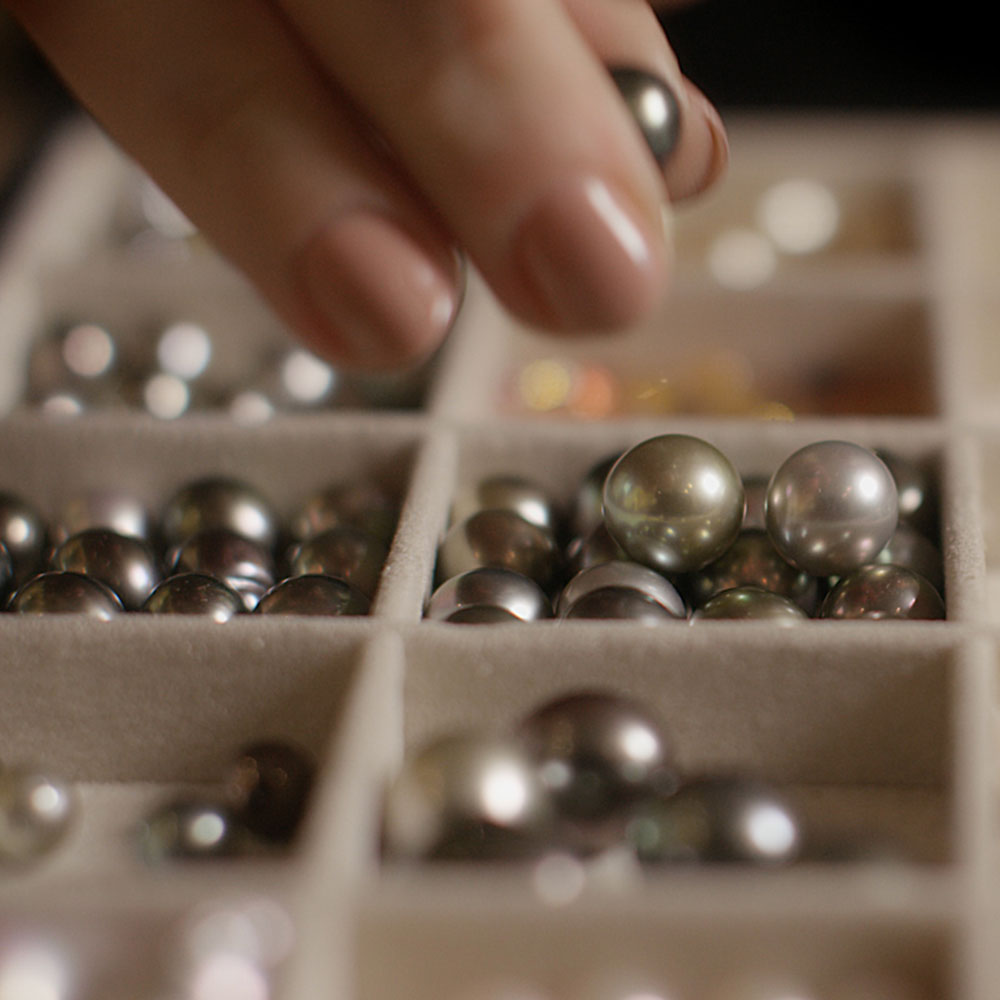
Shape is where value can surprise you. “Traditionally, the rounder an oyster pearl, the more expensive it will be,” says Chrissie. Pearls that are slightly off-round or elliptical usually sell for a little less.
Teardrops are the exception. “A teardrop is probably more valuable, because it can be made into earrings,” she explains, “and finding a matching pair is quite difficult.”
Read our guide to the unique shapes in pearls to find out more.
Colour depends on where you are
Colour plays a part too, though its value isn’t fixed. “Colour very much comes down to what will sell best in a shop,” says Chrissie.
That varies by region, along with the skin tones most common there:
- In much of Europe, whiter and pinker pearls tend to be most sought after
- In Japan and the Far East the preference is for white-pink pearls with green overtones
- In South America, and in countries such as Italy, Spain and Portugal where more people tan easily, creamier pearls command higher prices
Our colour matching works on the same principle: the right pearl is the one that flatters the skin it sits against.
Don’t judge it by the clasp
The clasp is often the first thing people check when it comes to telling if a pearl necklace is valuable. But it’s the least reliable guide. “People see a silver clasp and think it’s not valuable, but that’s not necessarily true,” says Chrissie. “We often string beautiful pearls on less important clasps to fool robbers. And I’ve seen beautiful clasps on really horrible imitation pearls.”
A cheap base-metal clasp is still worth noting, though. In Chrissie’s experience, the pearls on one are rarely valuable. For more on clasps and stringing, see our guide on how to tell if a pearl necklace is good quality.
Natural or cultured?
One factor can’t be judged by eye at all. Natural pearls, formed without any human intervention, are extremely rare, and most pearls on the market today are cultured. “A natural pearl, even if it has ugly marks, will be much more expensive than a cultured pearl, simply because it’s natural,” says Chrissie. Telling the two apart usually takes a specialist.
For Chrissie, there’s one final test that has nothing to do with price. “Be guided by the lustre, by a beautiful skin, by the colour and the shape, and also by whether it looks good on you.” If you’d like help finding pearls that pass every one of these tests, book your consultation today.