

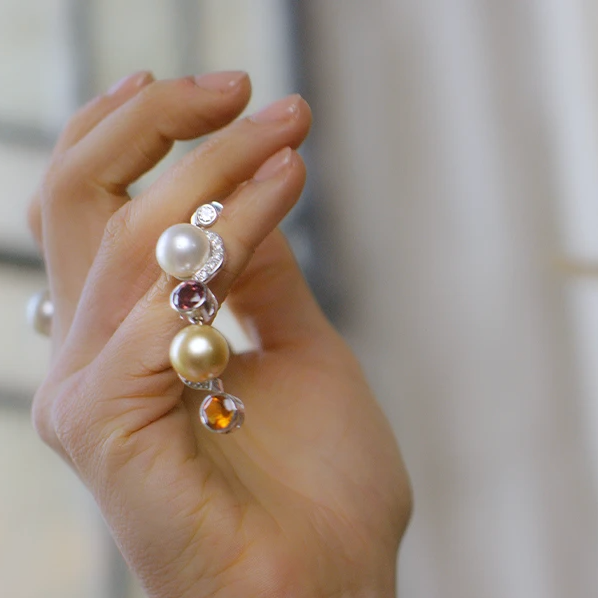




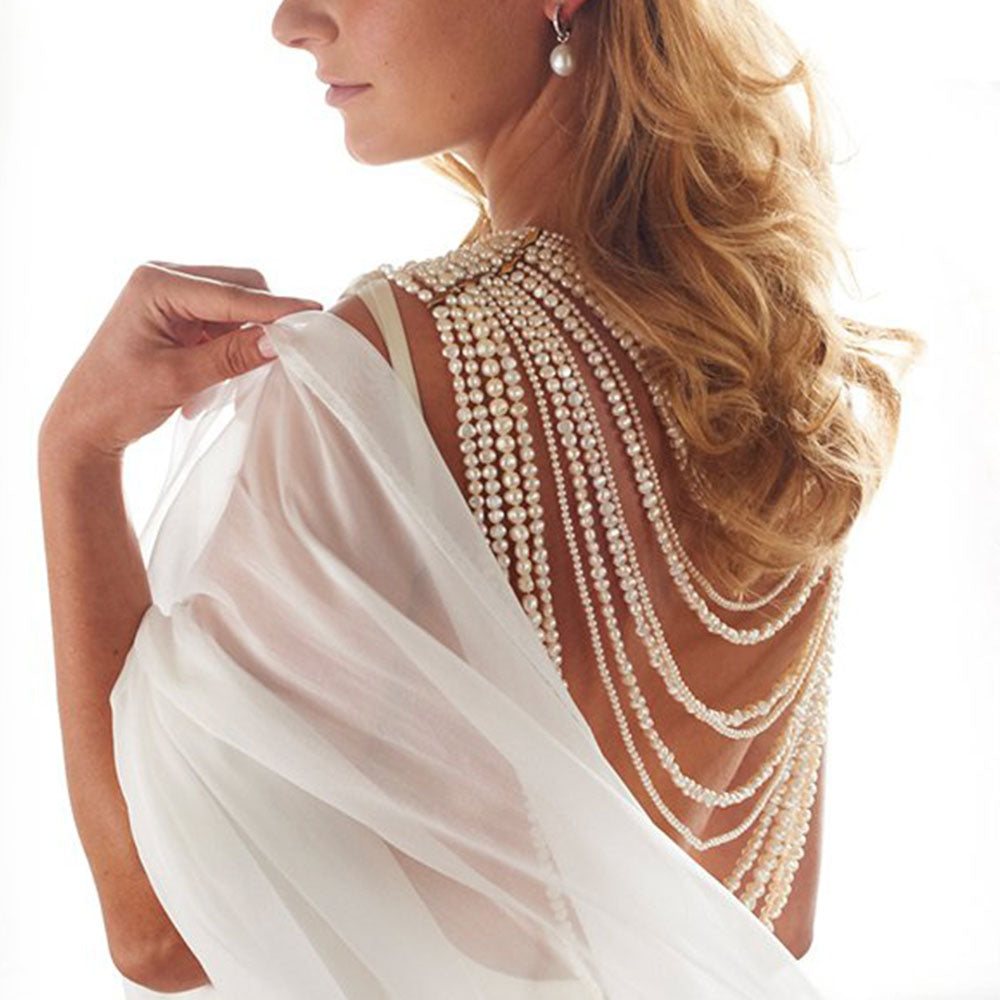














Not all pearl necklaces are created equal. The difference isn't always obvious at a glance between a piece that will last decades and one that won't.
Below, Chrissie Douglas shares the five things she looks at when assessing a pearl necklace, from the stringing to the surface of the pearls themselves.
It’s worth noting that this guide applies to natural and cultured pearls only. Imitation pearls (acrylic or crushed shell on plastic) are a different matter entirely.
Start with the stringing
Before looking at the pearls themselves, Chrissie looks at how the necklace is strung. This is the quickest indicator of overall quality.
"The first thing I look at is the stringing," she says. "If the stringing is on wire, on elastic, or held to the clasp with little crimp-on fittings, that immediately tells me it's bad quality. It means the piece has been made somewhere that doesn't choose or buy its pearls properly."
A well-made pearl necklace should be strung on silk thread, with individual knots between each pearl or at least at short intervals. This protects the pearls from rubbing against one another and makes sure the necklace drapes correctly. It also means that if the thread ever breaks, you lose one pearl rather than all of them.
Then the clasp (with a caveat)
A good quality clasp in 18-carat gold, platinum, or silver (or a pearl toggle clasp) is a positive sign, particularly when combined with good stringing. But Chrissie is quick to point out that the clasp alone can be misleading.
"Some people will have really beautiful pearls in a very humble-looking clasp," she says. "And that is to fool whoever might try to steal them into thinking they're not good. In fact, we do a lot of stringing exactly like that. It's a very good way of deterring any would-be robbers."
The reverse is also true: an impressive clasp on poorly strung pearls tells you little about the quality of the pearls themselves. Look at everything together.
Lustre is the most important quality indicator
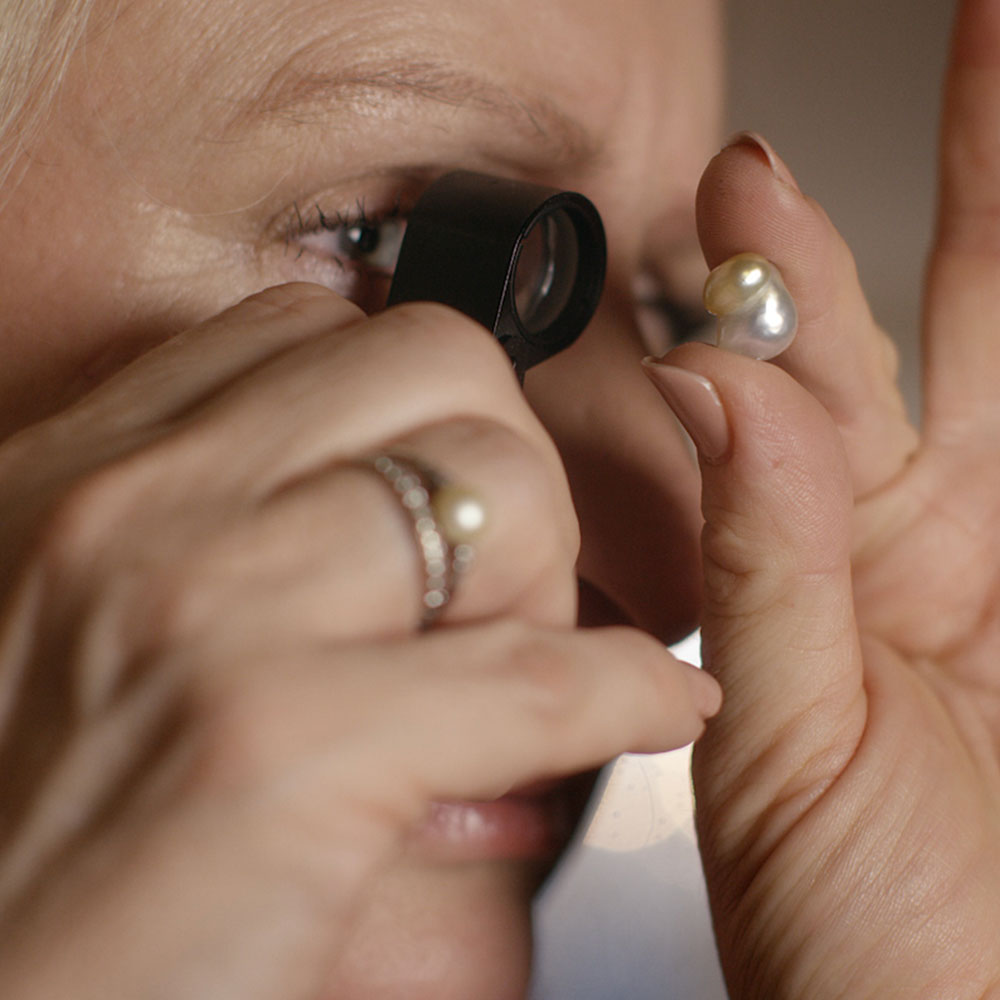
Once you’ve assessed the stringing and clasp, turn to the pearls. Lustre is the single most important indicator of pearl quality. This refers to the depth and refractivity of the surface, which is easiest to judge with the naked eye.
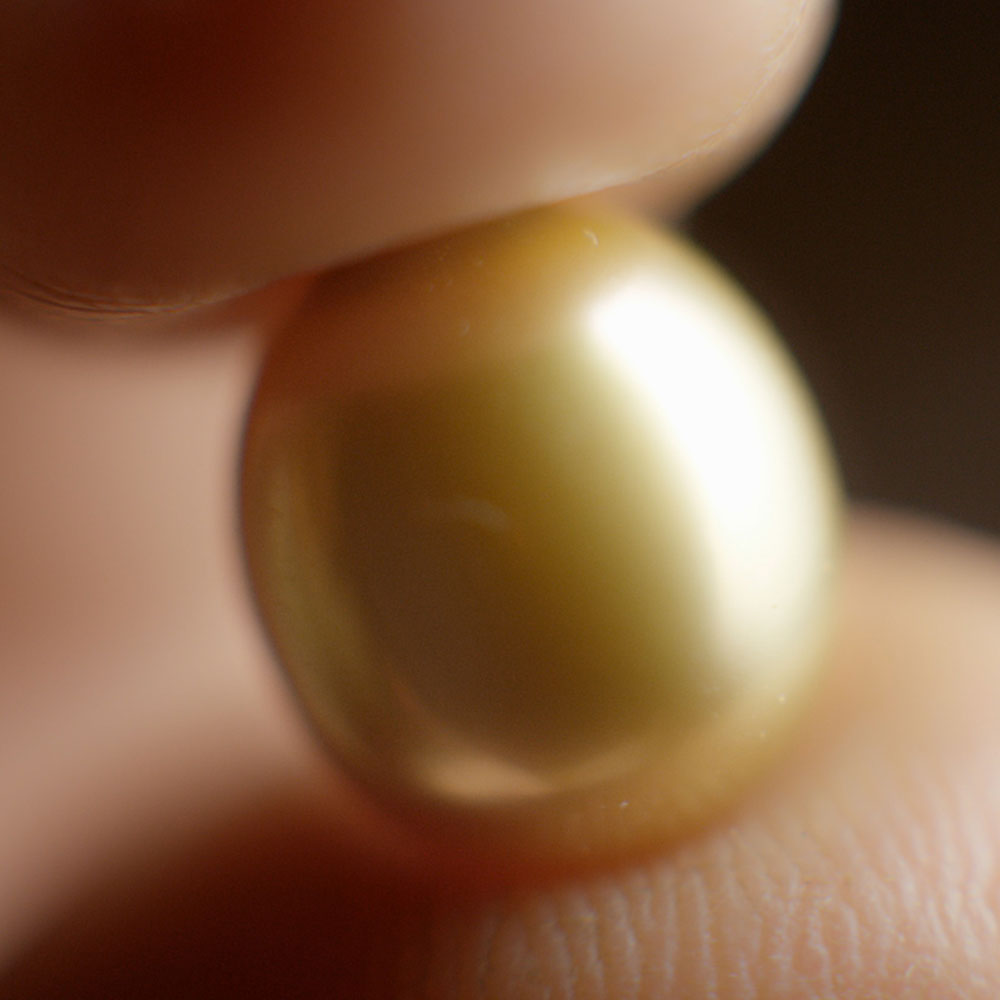
"If it's a good lustre, it glows. When you put it on, it makes you look good," says Chrissie. "If it looks like a dead fisheye, then it's really bad quality and it will not do you any favours when you wear it, however big the pearl may be."
High-lustre pearls have a near mirror-like surface. You should be able to see a reflection in them. Low-lustre pearls look dull, chalky or flat. No amount of size or rarity compensates for poor lustre.
Check the surface of the skin
Very few pearls are entirely blemish-free. Those that are command a significant premium. What matters is the nature and extent of the markings.
"If the skin of the pearl has pockmarks, rings or obvious markings that aren't lustrous, it's not a good pearl," says Chrissie. "Most pearls will have some kind of mark. But as long as there is nacre on it and it's lustrous, it's very acceptable. It would be better if it were clean, but then you will pay the price for that."
Look for blemishes that interrupt the lustre. These include dull patches, deep pits or irregular ridges. Surface marks that sit within a lustrous nacre layer are far less significant than those that suggest thin or damaged nacre underneath or a fault in the nacre layer like a dull patch.
Matching and harmony across the strand
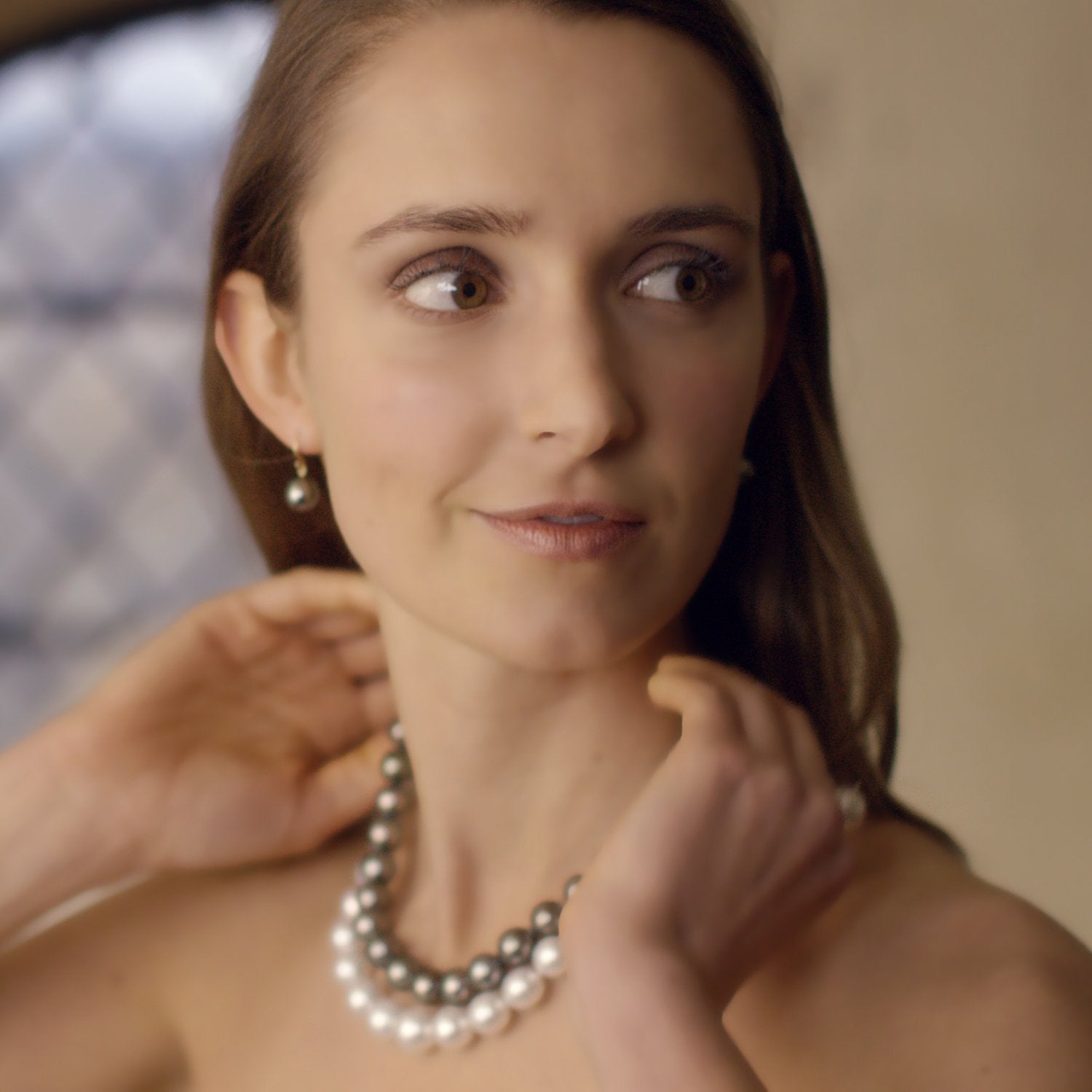
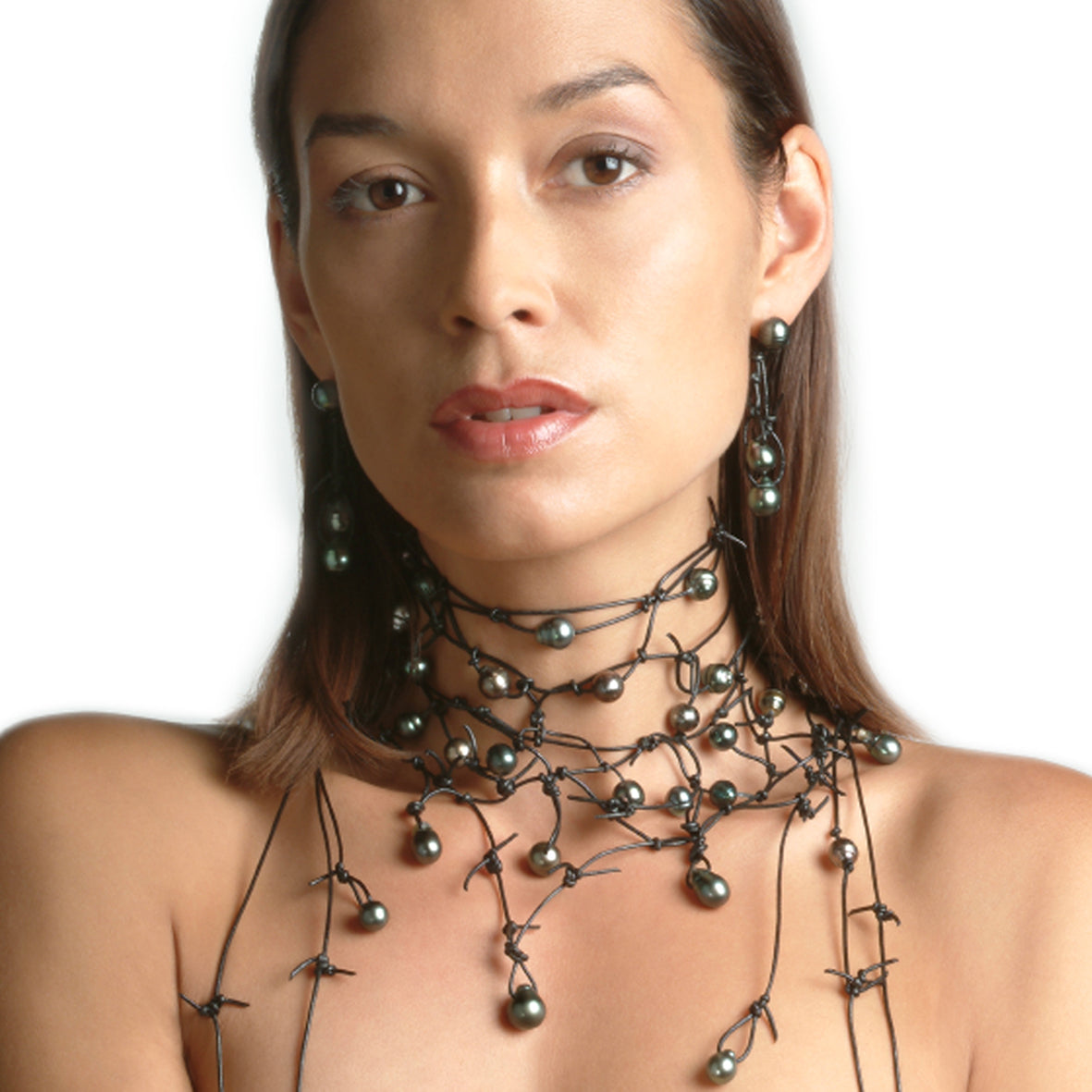
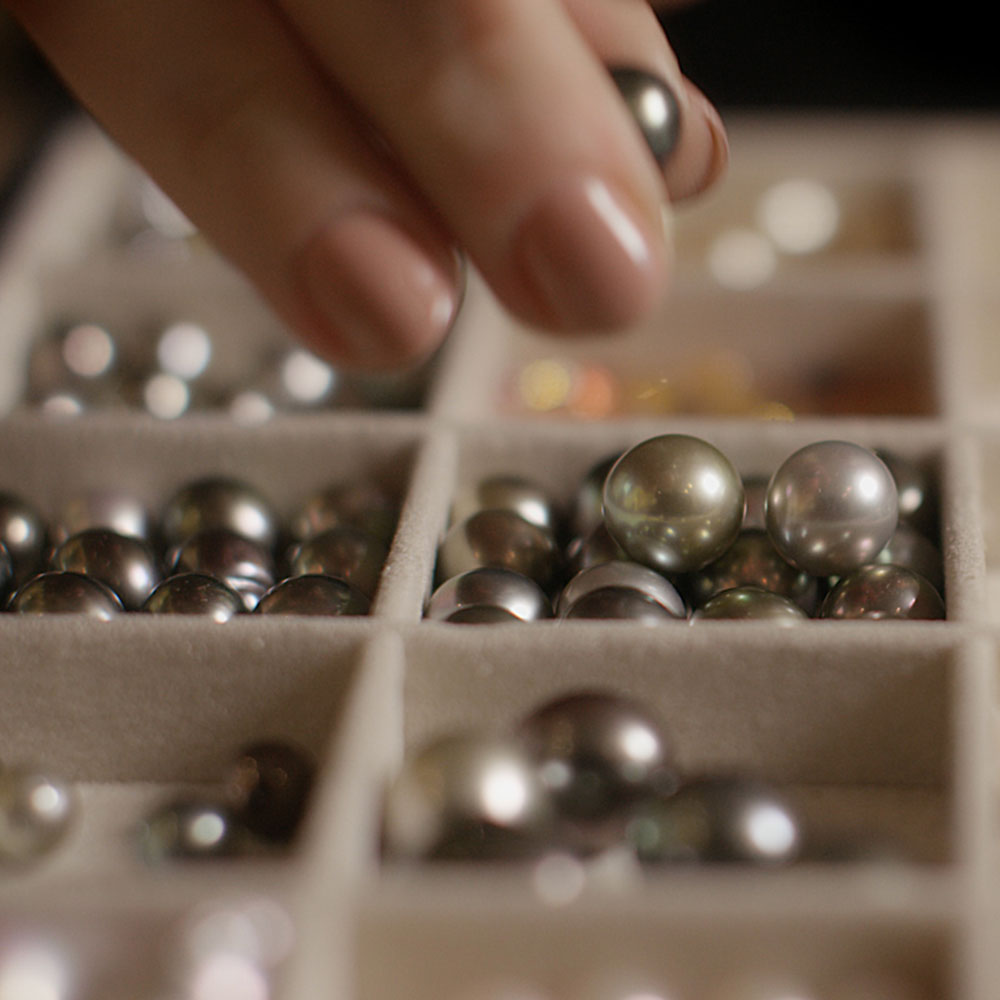
On a necklace intended to be one colour, the pearls should be well-matched in both colour and overtone. They should be graduated or consistent in size in a way that reads as intentional. A strand where the pearls vary noticeably in tone or size (without that being part of the design) suggests the piece was assembled without care.
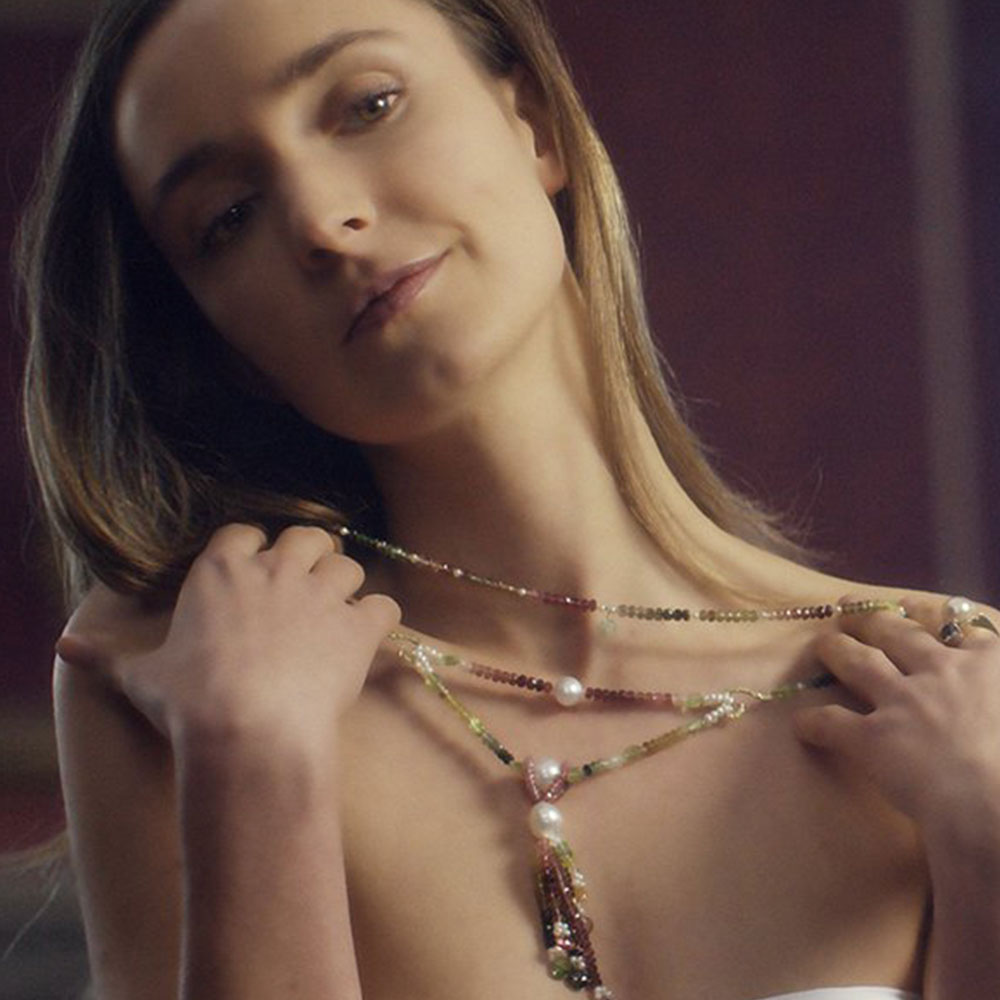
"You need to keep the pearls and their overtones quite similar, and well-ranged in size," says Chrissie. "Unless you're going for multicoloured, in which case you can mix and match. But even then, there needs to be a harmony to the piece by keeping the overtone similar."
Why matching matters
Matching is painstaking work. On a high-quality strand, each pearl will have been selected individually to sit alongside its neighbours. That care is visible, and its absence is equally glaring to the eye of the beholder.
If you would like expert guidance on assessing or choosing a pearl necklace, Coleman Douglas Pearls offers personal consultations led by Chrissie herself. Book your consultation today.